Southwest and Ten Thousand Islands
Tarpon in Southwest and Ten Thousand Islands
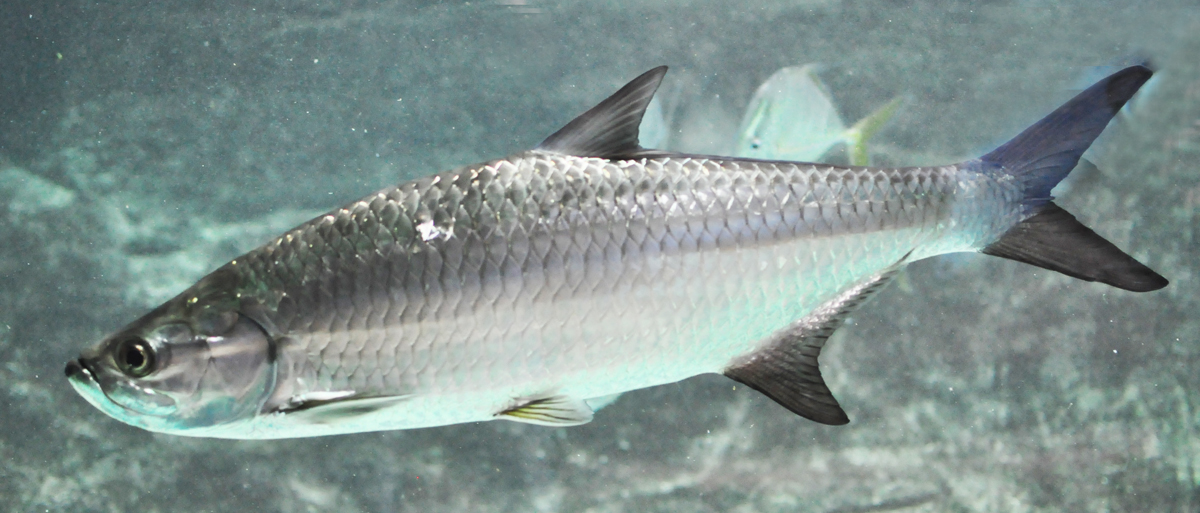
Live crabs and threadfins in the passes and along beaches during the spring migration, fly and artificials on the flats and at bridges.
Next three days
| Day | Bite | Why |
|---|---|---|
| Sun, Sep 13 | 8 | New Moon feeding boost. Light wind. Storms possible, fish early and watch the sky. Strong tide swing 4.2 ft |
| Mon, Sep 14 | 7 | Light wind. Storms possible, fish early and watch the sky. Strong tide swing 4.1 ft |
| Tue, Sep 15 | 5 | Rain likely 83%. Heat, fish early or late. Storms possible, fish early and watch the sky. Strong tide swing 3.9 ft |
Seasonal pattern
Jan
Feb
Mar
Apr
May
Jun
Jul
Aug
Sep
Oct
Nov
Dec
Editorial baseline for Florida. Green months are prime, yellow fair, red slow. Preferred water temperature 74–88°F.
Regulations that apply here
Applies to: State and Federal Waters of the Gulf and Atlantic · Licenses: One tarpon tag per person per year may be purchased when in pursuit of a Florida state or world record.
| Species / zone | Season | Size | Bag | Notes |
|---|---|---|---|---|
| Tarpon Statewide | open now Open year-round | None. Tarpon over 40 inches MUST remain in the water unless in pursuit of a state or world record using a tarpon tag. | Tarpon is a catch-and-release only fishery. One tarpon tag per person per year may be purchased when in pursuit of a Florida state or world record. Vessel, transport and shipment limited to one fish. | Hook and line only. Snagging, snatch hooking, spearing and the use of a multiple hook in conjunction with live or dead natural bait is prohibited. Catch-and-release only fishery. Tarpon over 40 inches MUST remain in the water unless in pursuit of a state or world record using a tarpon tag. Keep tarpon, especially the gills, in as much water as is safely possible. |
| Tarpon Boca Grande Pass boundaryBoundaries defined by: Charlotte Harbor Channel LB6 (26 degrees, 42.299 minutes north; 82 degrees, 16.551 minutes west), Concrete Pier (26 degrees, 43.165 minutes north; 82 degrees, 15.778 minutes west), Phosphate Dock (26 degrees, 43.216 minutes north; 82 degrees, 15.517 minutes west), Intracoastal Waterway (26 degrees, 43.216 minutes north; 82 degrees, 14.703 minutes west), Flashing Green #75 (26 degrees, 42.299 minutes north; 82 degrees, 14.580 minutes west), QR Test Buoy (26 degrees, 42.002 minutes north; 82 degrees, 15.448 minutes west). | open now Open year-round | None. Tarpon over 40 inches MUST remain in the water unless in pursuit of a state or world record using a tarpon tag. | Tarpon is a catch-and-release only fishery. One tarpon tag per person per year may be purchased when in pursuit of a Florida state or world record. Vessel, transport and shipment limited to one fish. | Fishing with gear that has a weight attached to a hook, artificial fly or lure in such a way that the weight hangs lower than the hook when the line or leader is suspended vertically from the rod is prohibited year-round. If this gear is on board a fishing vessel while inside the boundaries of the Pass, it cannot be attached to any rod, line or leader and must be stowed. Natural bait is not considered to be a weight. Any jig that allows the attached weight to slip down the shank so that it hangs lower than the hook while the line or leader is suspended vertically from the rod is prohibited, and must be stowed so it is not readily accessible. During the months of April, May and June, no more than three fishing lines may be deployed from a vessel at any one time AND no person shall use, fish with, or place in the water any breakaway gear. Catch-and-release only fishery. Tarpon over 40 inches MUST remain in the water unless in pursuit of a state or world record using a tarpon tag. Keep tarpon, especially the gills, in as much water as is safely possible. |
- Tarpon is an iconic saltwater fish. When handled properly, these silver kings are more likely to survive release and evade predators.
- Tarpon smaller than 40 inches should only be handled with wet hands and be supported horizontally under the belly, if removed from the water.
- Keep the gills of tarpon in the water to minimize air exposure.
- Keep fingers away from the gills and eyes.
- Avoid dragging tarpon over the gunnel of a boat or over rocks or railings.
- Catch and release tarpon as quickly as possible to reduce stress on the fish.
- Aim for a no-touch release by either using a long-handled dehooking tool to remove the hook or cut the line as close as possible to the hook.
- If the tarpon is gut hooked or the hook is lodged in the throat, cut the line as close to the hook as possible.
- Revive a lethargic tarpon by holding it horizontally in the water to allow it to pump water through its gills.
- Sharks are known to prey upon tarpon during the fight. If a shark shows up, help the tarpon survive by quickly bringing the fish to the boat and cutting the line as close to the hook as possible.
- It is recommended to avoid fishing for tarpon from bridges or piers. Only tarpon under 40 inches may be removed from the water, so if you did hook up to a large tarpon from a bridge or pier, you would have to cut the line and leave a long line trailing behind the fish, leading to entanglements and reducing survivability.
Source: FWC, extracted 2026-09-12. Review flags: The page provides extensive 'Best Fishing Practices' (gear recommendations, fighting techniques, handling, release, sharks) which are advisory and not regulatory restrictions, so they are summarized in general_notes rather than the rules array.